Early detection of vision problems in children is crucial for their academic performance, social development, and overall quality of life. Many children struggle silently with poor vision — they don't know what "normal" vision looks like. Here's what every parent needs to know.
Why Children's Eye Health Is So Critical
Approximately 80% of learning in a child's early years is visual. Poor vision doesn't just affect what a child can see — it affects their ability to read, write, play, and interact with the world. Yet many vision problems in children go undetected because children rarely complain about "blurry vision" — it's all they've ever known.
When Should Your Child Have Their First Eye Test?
Before 12 Months
Your paediatrician should perform a basic vision screening at well-child visits. Alert them if your baby doesn't track moving objects by 3 months, or if their eyes appear crossed or misaligned.
Age 3–4 Years
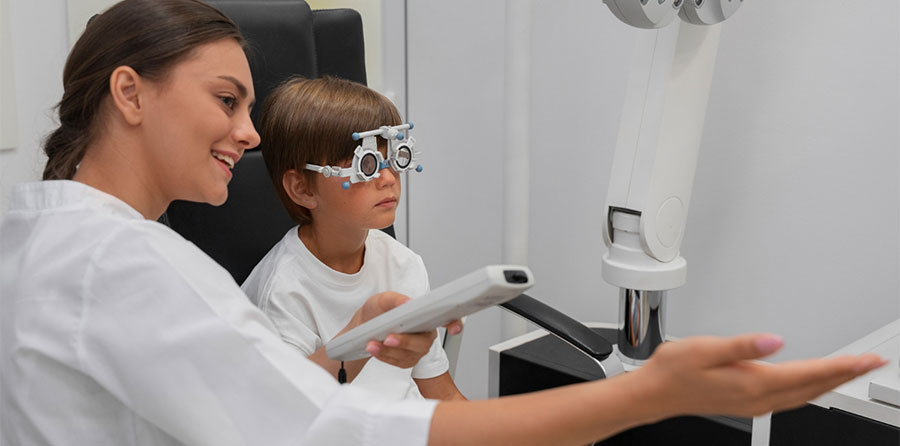
This is the recommended age for the first comprehensive eye examination. By age 3–4, children can reliably identify shapes, letters, or pictures on the chart. Conditions like amblyopia (lazy eye) are most effectively treated before age 6.
Before Starting School (Age 5–6)
All children should have an eye exam before starting school. Many schools offer basic screenings, but these don't replace a full examination — they miss significant conditions including farsightedness (the most common undetected condition in children).
Every 1–2 Years After That
Children's eyes change rapidly. Annual exams are recommended, especially if there is a family history of myopia, strabismus, or other eye conditions.
Warning Signs in Children
Bring your child in sooner if you notice any of these:
- Squinting or closing one eye to see better
- Sitting too close to the TV or holding books very close to the face
- Complaints of headaches or eye pain, especially after reading
- Rubbing eyes frequently
- Avoiding activities that require close-up vision (reading, drawing)
- Poor academic performance, particularly in reading
- One eye turning in or out (strabismus)
- Sensitivity to light
Common Vision Problems in Children
Myopia (Short-sightedness)
The most common childhood vision problem globally, and it's increasing rapidly. Children with myopia can see close objects clearly but struggle with distance — the board at school, for instance. Myopia typically develops between ages 6–14 and progresses until the late teens.
Hyperopia (Long-sightedness)
Often overlooked because children can compensate with effort, causing headaches and eye strain. Significant hyperopia needs correction to prevent amblyopia (lazy eye).
Amblyopia (Lazy Eye)
The brain suppresses the image from one weaker eye, causing it to "switch off." Treatment is most effective before age 7 — after that, it becomes progressively harder. Regular eye exams are the only reliable way to detect amblyopia early.
Strabismus (Crossed Eyes)
When the eyes don't align properly. Can cause amblyopia if untreated. Treatment includes glasses, patching, and sometimes surgery.
Choosing Glasses for Children
Once your child has a prescription, choosing the right frames is key:
- Look for flexible, spring-hinge frames that don't break easily
- Ensure a proper fit — frames shouldn't slide down the nose or sit unevenly
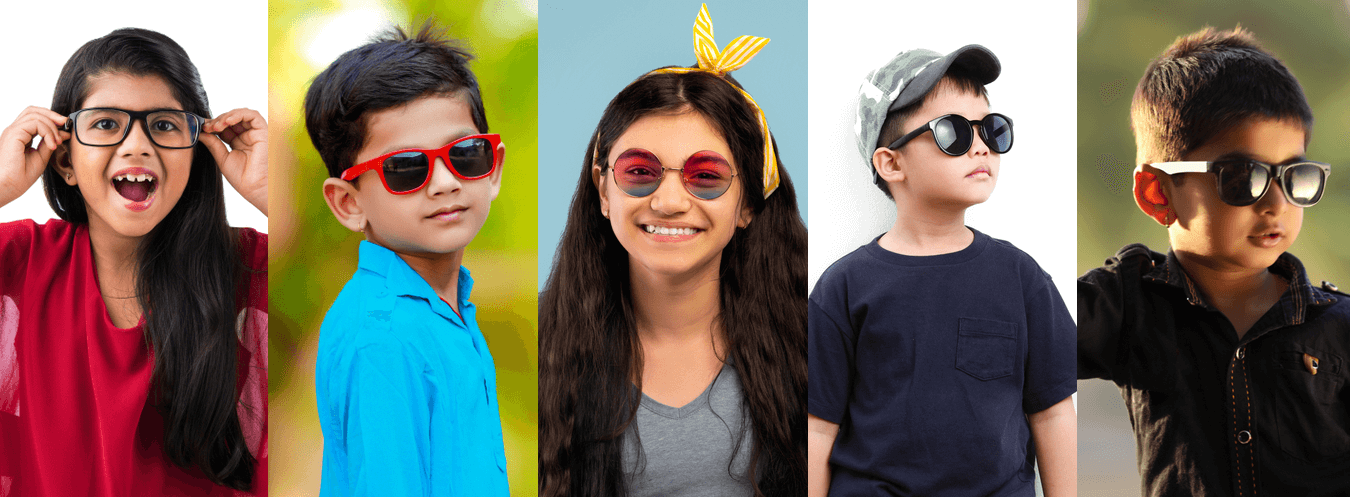
- Let your child choose their favourite style — if they love the glasses, they'll wear them
- For younger children (under 6), wrap-around styles with a strap work best
- Polycarbonate lenses are the safest choice — they're impact-resistant
"Children rarely tell you their vision is blurry — because they don't know it should be clearer. Regular eye exams speak for them."
— Dr. Meera Nair, Spectica Paediatric Optometrist
At Spectica, our optometrists are experienced with children of all ages and are skilled at making the experience fun and comfortable. We offer a wide range of durable, colourful kids' frames. Browse our Kids' Collection → or book a free eye test.
Share this article
Have Questions About Your Eye Health?
Book a free eye test with our certified optometrists at Spectica.
Book Free Eye Test